Oil Breaks $101 as Gulf Hurricane Threat and Middle East Tensions Put Supply Back in Focus
PERTH—October 7, 2026—Oil pushed above $101 a barrel Wednesday as traders confronted a dangerous combination of risks: a developing Gulf of Mexico storm threatening the heart of U.S. energy infrastructure, escalating Saudi-Houthi hostilities, and renewed uncertainty surrounding the eight-month U.S.-Israeli war with Iran.
Brent crude futures climbed 93 cents, or 0.92%, to $101.51 a barrel by 0022 GMT, while U.S. West Texas Intermediate rose 82 cents to $90.25. The gains came even as more Middle Eastern crude reached global markets, leaving traders to weigh improving physical supply against multiple threats capable of disrupting it.
For now, those threats remain uneven. The Gulf storm has not been reported to have caused severe refinery damage, while increased Middle Eastern exports are still providing additional barrels. The central question is how quickly that balance could change.
A Storm Heads Toward the Heart of U.S. Oil Production
U.S. forecasters said the developing Gulf of Mexico system could become the first Atlantic hurricane of 2026 within 2 days and threaten offshore oil and gas facilities.
The projected path puts infrastructure responsible for about 15% of U.S. crude production and 5% of natural-gas output at potential risk. Six refineries could also be affected.
That exposure matters because Gulf Coast states account for roughly 50% of U.S. refining capacity, totaling about 18.2 million barrels per day.
KCM Trade chief analyst Tim Waterer described the storm as an “unwelcome complication for crude,” citing the possibility of production and refining disruptions.
If operators are forced to shut facilities temporarily, crude processing could decline. More extensive damage could keep plants offline longer and tighten gasoline supplies — but neither outcome had been confirmed Wednesday morning.
Falling Inventories Add Another Pressure Point
The weather threat arrives as preliminary data indicates U.S. petroleum inventories are already tightening.
American Petroleum Institute figures cited by market sources showed crude inventories falling by 2.09 million barrels in the week ended October 2. Gasoline stocks also declined, while distillate inventories increased slightly.
That leaves traders particularly sensitive to any disruption along the Gulf Coast.
A short-lived interruption would not automatically produce a nationwide fuel shortage. But simultaneous production and refinery outages could tighten regional fuel markets and increase pressure on gasoline prices.
For now, that remains a risk scenario rather than a reported outcome.
More Middle East Oil Is Flowing—But Security Risks Are Growing
There is one major factor working against higher prices: more oil is reaching the market.
Saudi Arabia’s East-West pipeline has reached 5.8 million barrels per day, while Vitol’s chief executive said roughly 12 million bpd of crude and 2 million bpd of refined products had departed the Middle East on tankers during the previous 7 to 10 days.
But security conditions are deteriorating.
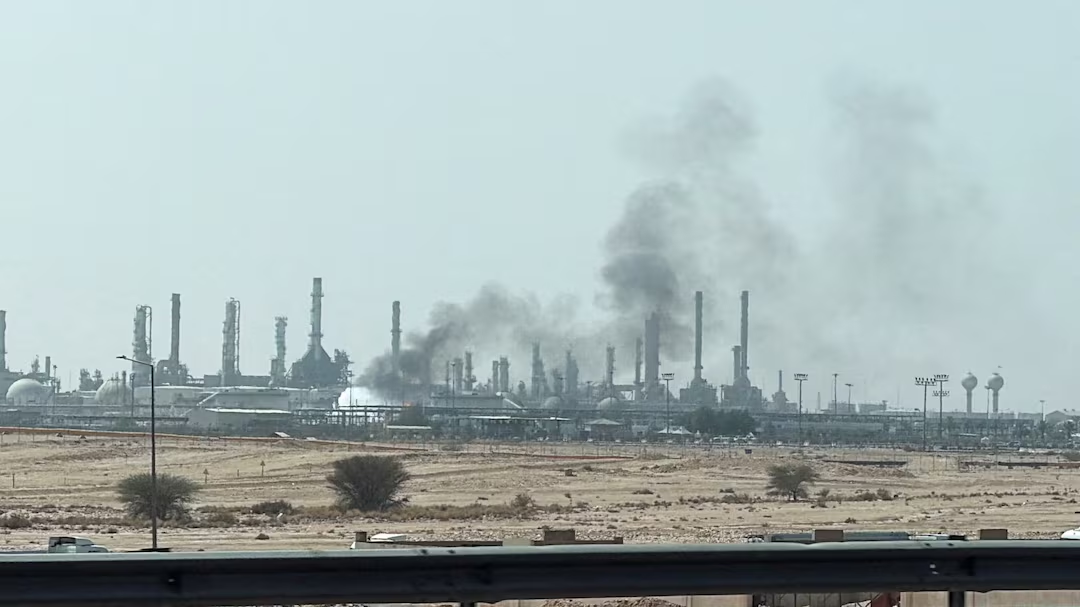
Saudi authorities said airports in Jazan and Najran were targeted Monday as fighting with Yemen’s Iran-backed Houthis escalated. Saudi-backed Yemeni forces have been pressing an offensive to recover territory, while Riyadh has stepped up airstrikes.
Further escalation could complicate shipping or increase the geopolitical premium attached to Middle Eastern oil. There was no confirmation Wednesday that the attacks had caused a broad disruption to tanker schedules.
Trump Questions Who Is Running Iran—Tehran Pushes Back
Adding to the uncertainty, President Donald Trump raised new questions Tuesday about Iran’s leadership after months of war.
“Their leaders are gone; their second group of leaders is gone,” Trump said, adding that his biggest concern was that “nobody knows” who is running Iran.
The leadership question has become more complicated since Supreme Leader Ayatollah Ali Khamenei was killed on February 28, the first day of the U.S.-Israeli war with Iran. His son, Mojtaba Khamenei, succeeded him but has not appeared publicly since being injured in the same strike that killed his father.
Tehran disputes Trump’s characterization.
Iranian Foreign Ministry spokesman Esmaeil Baghaei said Washington knows who its Iranian counterpart is and understands Iran’s decision-making structure. He argued that the uncertainty instead comes from “contradictory positions and mixed messaging” by U.S. officials.
The exchange highlights another problem for energy markets: uncertainty over who can negotiate, what terms could end the conflict, and how quickly any de-escalation might emerge.
Why $100 Oil Could Prove Difficult to Shake
The market is now caught between improving supply and worsening risk.
More Middle Eastern crude is moving toward buyers. At the same time, a Gulf hurricane could interrupt U.S. production and refining, Saudi-Houthi hostilities are escalating, and Washington and Tehran remain far apart after 8 months of war.
Oil analyst Mukesh Sahdev said prices could remain elevated near $100 without meaningful de-escalation, as attacks and refinery disruptions keep supply concerns alive.
That leaves 2 immediate flashpoints for traders.
If the Gulf storm passes without serious damage, part of the weather premium could fade. But prolonged refinery outages would increase the risk of tighter U.S. fuel supplies. Likewise, Middle East exports remain substantial, but any escalation that interferes with tanker movements could quickly put regional supply back at the center of the market.
For now, neither worst-case scenario has materialized. But with Brent already above $101 a barrel, the market is increasingly dependent on one thing it cannot guarantee: that several potential supply disruptions do not arrive at the same time.