
Iran Strikes Expose Hidden Weakness in Digital Infrastructure Supporting Critical American Services
WASHINGTON — October 7, 2026 — Iranian strikes on Amazon Web Services facilities in the Gulf have exposed a vulnerability extending beyond individual data centers: critical digital services can remain dependent on concentrated cloud infrastructure whose physical destruction can knock workloads offline and, in extreme cases, leave stored data beyond recovery.
AWS said facilities in the United Arab Emirates were directly struck during the March conflict, while infrastructure in Bahrain was damaged by a nearby drone strike. Months later, AWS said some affected resources could no longer be restored.
But the broader claim requires an important qualification: the attacks did not demonstrate that a single strike could shut down America's entire digital network. They showed how physical damage can overwhelm regional redundancy when important workloads remain concentrated in the same cloud region.
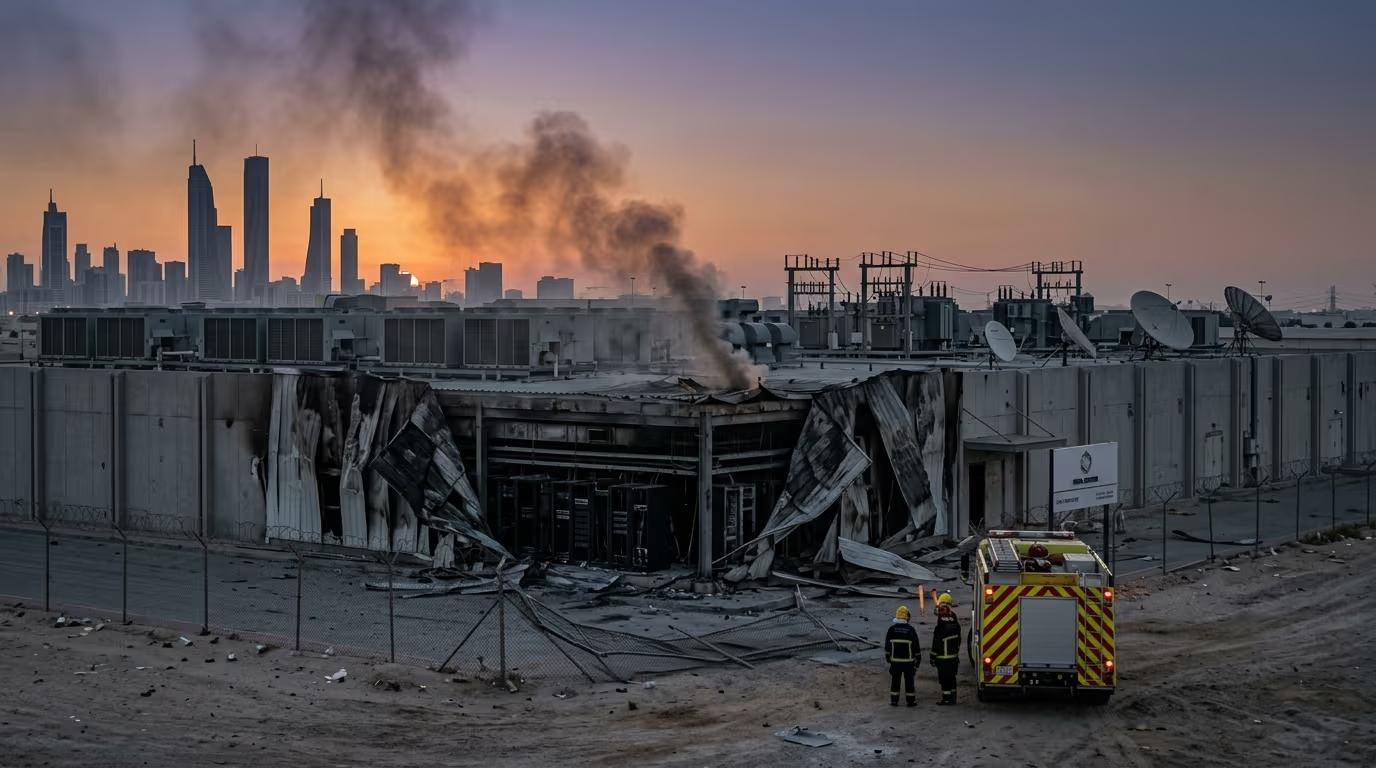
Damage to cloud infrastructure in the Gulf highlighted the physical vulnerability behind services commonly described simply as “the cloud.”
The Cloud Has a Physical Weak Point
Cloud computing can appear geographically limitless to customers, but the underlying system still depends on buildings, power, cooling equipment, fiber connections and clusters of servers.
The Gulf strikes provided an unusually stark demonstration. AWS said damage in its Bahrain region eventually spanned multiple availability zones and exceeded what its regional and multi-zone services were designed to withstand. In the UAE, AWS determined that resources and data stored exclusively in one affected availability zone could not be restored.
That distinction matters. Redundancy protects a service only when copies and recovery capacity are sufficiently separated from the same physical disaster or attack.
Why the Risk Reaches Beyond One Technology Company
The concern is not limited to AWS or the Middle East. The U.S. Treasury has previously warned that financial institutions increasingly rely on a relatively small number of major cloud providers. It identified provider concentration as a potential resilience problem because one operational incident could affect many financial-sector customers simultaneously.
That creates the wider risk suggested by the Iran strikes: a successful physical attack does not need to destroy every server used by a bank, government contractor or communications company. Disruption can spread when multiple organizations depend on the same underlying provider, region or connected third-party services.
The Treasury assessment did not predict that such an event would collapse the U.S. financial system. Instead, it warned that the extent of a severe cloud-provider disruption remains difficult to measure.
Which Part Could Fail First?
The clearest answer emerging from the Gulf experience is regional cloud availability — particularly workloads and data concentrated within the same physical cloud region.
AWS reported that most customers affected in Bahrain had moved workloads elsewhere before the entire region became unavailable. Customers with backups or copies in other regions had recovery options; resources stored exclusively inside infrastructure that could not be restored faced a far more serious outcome.
That is the hidden weakness behind the hook. The vulnerability is not simply one data-center building. It is the dependency chain created when many digital services share concentrated physical infrastructure beneath the cloud.
Iran's strikes therefore offered a real-world stress test of a risk U.S. financial regulators had already identified in theory: concentration can turn a localized cloud failure into disruption affecting many customers at once. The unanswered question for Washington and industry is how much critical activity remains exposed to that same architecture — and how quickly it could shift elsewhere during a larger attack.