What Changed in California’s Ballot Fight?
Supreme Court Rejects Trump Administration’s Bid to Separate Thousands of California Ballots
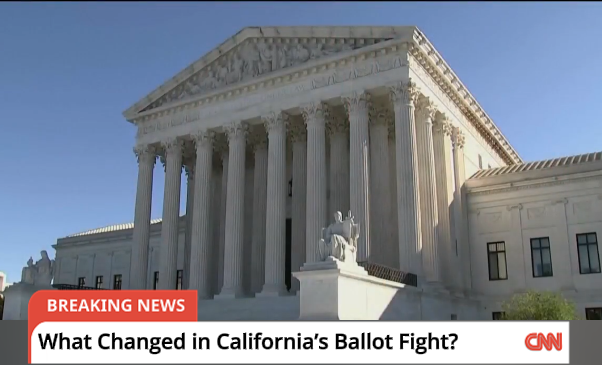
The justices denied an emergency request involving roughly 20,000 voters the federal government identified as likely noncitizens, leaving lower-court decisions in place as California voters cast their final ballots in the 2026 midterm elections.
The Supreme Court on Monday rejected the Trump administration’s emergency effort to require California to separate ballots connected to roughly 20,000 people federal officials identified as likely noncitizens.
The court’s brief order denied the government’s application for an injunction pending appeal. The request was presented to Justice Elena Kagan and referred to the full court, according to the official order. No public dissent was recorded, and the court offered no explanation for its decision.
The ruling came one day before Election Day on November 3 and left intact lower-court decisions refusing to force California election officials to segregate the disputed ballots while the Justice Department continues its legal challenge.
What the Administration Wanted
The Justice Department sued California in October after federal agencies developed a list of more than 20,000 people who appeared on voter-registration data and whom the government said were likely not U.S. citizens.
In its Supreme Court application, the federal government said the disputed ballots should be separated — not canceled — while officials determined whether the voters were legally eligible to participate. The administration argued that once challenged ballots were mixed with other ballots, they could no longer be individually identified if a court later concluded they should not have been counted.
Federal law prohibits noncitizens from voting in federal elections. But the dispute before the courts also involved a separate question: whether the executive branch could compel California to change how it handled ballots during an election already underway.
U.S. District Judge David O. Carter rejected the administration’s emergency request in late October, warning that imposing the proposed procedure at that stage could disrupt election administration and potentially affect eligible voters.
A divided panel of the 9th U.S. Circuit Court of Appeals then denied the government’s request for an injunction pending appeal. The majority concluded that the federal government had not met the demanding legal standard required for emergency relief.
The Supreme Court’s November 2 order left those decisions in place.
The Accuracy of the List Became a Major Issue
California officials have disputed the federal government’s characterization of the roughly 20,000 names, arguing that the list contains errors and does not establish that every person identified is an ineligible voter.
That distinction became increasingly important as the case moved through federal court.
An analysis filed by researchers with the UCLA Voting Rights Project examined a Justice Department list containing 20,930 names. The researchers said 8,880 names — about 42% — did not match anyone in California’s voter file. They also said they found U.S. citizens among those flagged and estimated that thousands of naturalized citizens were likely included incorrectly. The Justice Department disputed that analysis.
During separate litigation over federal demands directed at California election officials, a Justice Department attorney acknowledged that the data had a high error rate while explaining that federal officials wanted help from local registrars to verify voter eligibility.
Federal prosecutor Bill Essayli, who has been a prominent advocate for the administration’s effort, has maintained that the government has strong evidence supporting its concerns, while also acknowledging that errors may exist in the list.
Those competing claims are central to understanding the case: the administration has not simply argued that California should remove 20,000 proven noncitizens. Its legal filings described the people as individuals federal agencies believed were “likely” noncitizens, and the government sought additional verification.
A Broader Constitutional Dispute
The legal battle also raised questions about who controls election procedures.
The Constitution gives states the initial authority to prescribe the “Times, Places and Manner” of congressional elections while allowing Congress to alter those rules. Lower courts questioned whether the executive branch could use federal criminal law to compel California to adopt a ballot-segregation procedure that Congress had not imposed.
The 9th Circuit majority said California’s existing statutory process remained controlling because Congress had not enacted the specific ballot-handling requirement sought by the administration. One judge dissented, arguing that California’s position risked facilitating violations of federal law prohibiting noncitizen voting.
In separate litigation Monday, Chief Judge James Boasberg in Washington also found that the administration’s last-minute demands on California election officials likely violated the Constitution’s Elections Clause.
The Supreme Court did not endorse or reject those broader constitutional arguments in its short order. It simply denied the administration’s request for immediate relief. That means the underlying legal dispute can continue even though the requested emergency ballot-segregation order was not granted.
What Happens to the Ballots Now
The immediate consequence is straightforward: California was not ordered by the Supreme Court to separate the challenged ballots under the procedure requested by the federal government.
State and local officials can continue processing ballots under California’s existing election rules, subject to other applicable legal requirements and ongoing litigation.
The decision does not amount to a Supreme Court finding that every person on the federal list is a citizen. Nor does it establish that the government’s allegations are correct. The justices did not resolve the citizenship status of the individual voters or issue a final ruling on the merits of the Justice Department’s case.
Instead, the court rejected an emergency attempt to change how those ballots would be handled while the larger lawsuit continues.
With millions of California ballots already returned before Election Day, that procedural distinction carried immediate practical significance: the federal government sought intervention before ballots were processed and commingled, while California argued that imposing a new system at the last moment risked disenfranchising eligible voters and disrupting an election already in progress.
Comments (0)
Loading comments...
May You Like
Why Is Trump Ending Israel Aid Now?
UNDERCOVER DRUG RAID SPARKS HALLOWEEN CHAOS IN DALLAS—19 SHOTS IN 3 GUNFIGHTS!
HALEY STEVENS’ ANDERSON COOPER INTERVIEW DERAILS

Popular Posts
Why Is Trump Ending Israel Aid Now?
Nov 3, 2026